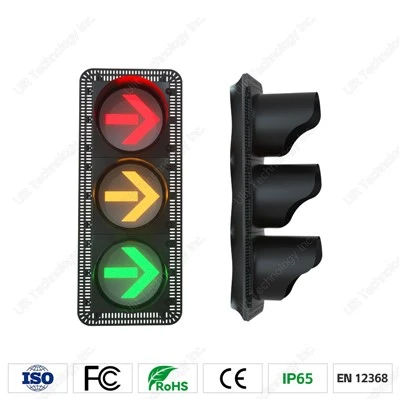
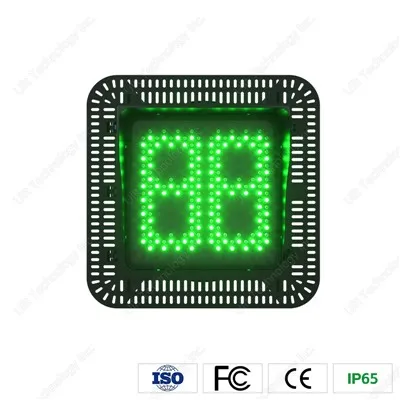
Traffic lights are crucial facilities for road traffic management. Their core function is to regulate the flow of vehicles and pedestrians, ensuring traffic safety and efficiency. Their specific significance can be analyzed from multiple dimensions:
Safety Management: By using red, yellow, and green lights in a time-sharing manner, right-of-way is enforced, reducing intersection conflicts. Statistics show that properly configured traffic lights can reduce traffic accident rates by over 30%.
Traffic Flow Optimization: Traffic flow data is dynamically adjusted to optimize timing schemes (such as green wave coordination control), improving road capacity. For example, during peak hours on main roads, signal coordination can increase traffic efficiency by 15%-25%.
Legal Basis: Traffic lights are the physical embodiment of the "Road Traffic Safety Law," and their lighting status has legal effect; violations will incur corresponding liability.
Technical Characteristics: Modern traffic lights generally use LED light sources (lifespan exceeding 50,000 hours), hot-dip galvanized anti-corrosion technology (salt spray resistance ≥1000 hours), and intelligent control systems (supporting remote monitoring and adaptive dimming).
Special Application Scenarios: Includes extended functions such as flashing warnings in school zones, bus priority signals, and forced switching for emergency vehicles.
International Standards Compatibility: Complies with ISO 9001 quality management system and EN 12352 optical performance requirements, ensuring global compatibility. We currently offer road traffic signal lights, featuring high-brightness LED light sources, hot-dip galvanized corrosion protection, remote intelligent control, and advantages such as long lifespan and low maintenance costs.