Nanbin Road in Chongqing, a place where old Chongqing and new Chongqing intersect, is not only home to many local residents who live and work there, but it also attracts a large number of tourists from other places who come here to to snap photos and "check in". However, while the beautiful landscapes bring a lot of popularity, they also lead to traffic congestion on Nanbin Road and its surrounding areas.
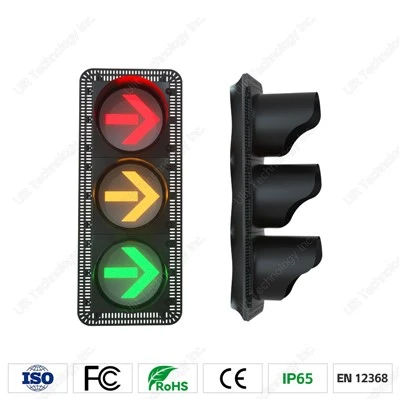
In order to improve the traffic situation in the Nanbin Road area, Nan'an District in Chongqing has launched a regional collaborative intelligent transportation reform project. This project aims to improve traffic conditions in the Shangxin Street area and Nanbin Road, thereby reducing traffic congestion and ensuring smooth traffic flow. The "secret weapons" of this project are intelligent traffic light controllers manufactured by a local Chongqing-based company.
Traffic Lights on Nanbin Road Grow "Antennas"

Smart traffic lights on Shangxin Street. Photo by Guo Xu
For a long time, most urban signal control systems have operated on a fixed-cycle operation mode, resulting in imbalances such as no vehicles passing through when the light is green in one direction, while vehicles queue excessively long in the other direction. The intelligent traffic light controllers developed by Ulit Technology Inc. has effectively solved these traffic problems.
Dai Gao, the general manager and senior engineer of Ulit Technology Inc., mentioned that taking the intersection of Sheraton and Nanbin Road as an example, the traffic management department in Nan'an has installed a large number of induction coils along that road. The coil automatically determines the road congestion situation by sensing whether there are vehicles above. At the same time, cameras for monitoring traffic flow, installed near the traffic lights, monitor the traffic flow in one direction in real time. When it is determined that vehicles are waiting in line for too long, the system will respond accordingly. Additionally, the system can also receive real-time data from other traffic lights and network data.
When the above elements are combined, the traffic lights with "antennae" operate in the optimal way to alleviate traffic congestion.
Intelligent Signal System: "Learns to Perceive and Think"
"Apart from the lack of perception devices, the low intelligence level of traffic light controllers is also a reason for the low traffic efficiency" Dai Gao explained. Based on this, Ulit developed the GJK-10 traffic light controller, which has comprehensive information sensing and access capabilities, logical operation and reasoning capabilities, and full IoT and intelligent operation and maintenance functions. It can be described as a "thinking traffic light controller".
How does the traffic light controller work? In terms of data perception, GJK-10 can describe and process traffic flow, occupancy rates, queue lengths, and various event data including smooth traffic, slow traffic, and congestion in the form of a "virtual detector", without missing any key control information. With security authorization, the virtual detector can also be remotely controlled via the network to achieve precise control of the green light duration at the system level in "seconds".
Dai Gao said that at the Sheraton intersection, real-time data such as induction coils, flow monitoring cameras, radars, and network data are integrated and processed through "Chongqing-made" traffic lights. The traffic lights' "brain" then generates corresponding control commands, enabling refined and intelligent traffic signal control and increasing traffic flow by approximately 30%.

Smart Traffic Layout in Chongqing Eases Traffic Pressure
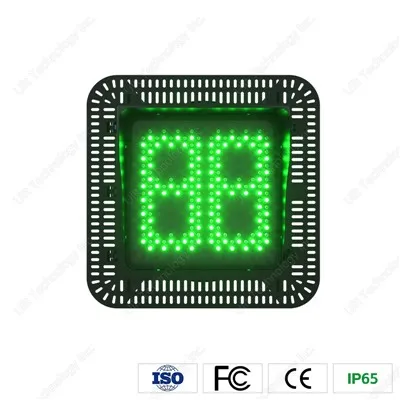
It is understood that in terms of optimized control, this traffic light controller can simulate the logic of manual on-site command or the control logic of post-event analysis and optimization, and release traffic flow in all directions in an orderly manner as needed. "This technology can already replace manual on-site command," said Dai Gao. In addition to saving human resources, Ulit, through technical cooperation with a Fortune Global 500 company, has achieved direct data transmission on the power lines of various field equipment, realizing "full connectivity" between the traffic light controllers and traffic lights, countdown timers, pedestrian crossing buttons, VMS, and various traffic detectors. It can also save the costs of digging trenches, laying pipes, and deploying communication lines during intersection renovations.

Currently, traffic police in Nan'an District have installed 10 sets of traffic lights at 8 intersections and road sections, and the effect of reducing traffic congestion and ensuring smooth traffic flow is beginning to show.
"Next, Ulit will continue to promote the construction of smart traffic in Nan'an District, while also expanding into areas of Chongqing such as Liangjiang New Area and Beibei Shuitu Street, to alleviate local traffic pressure and provide a better traffic environment for the public," said Dai Gao.
Upstream News - Reporter from Chongqing Morning Post, Zhang Hanxiang
Article source: CQNEWS. All rights reserved by the original author. If it is regarded as infringement, please contact us for deletion.