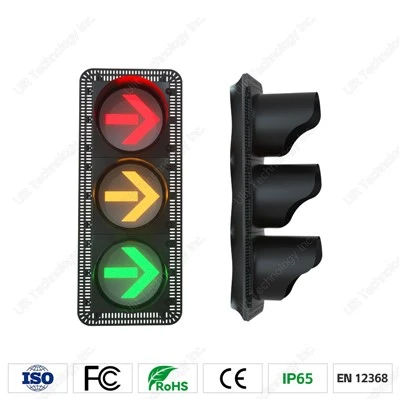
Traffic control systems, especially traffic signal control systems, are the carriers of traffic signal timing and determine the final implementation effect of signal timing schemes. Their technical means mainly include single-point control, arterial coordinated control, and regional network control; control methods encompass timing control, sensor control, adaptive control, and intelligent control.
Taking the United States as an example, its traffic signal timing practices have three characteristics: first, signal timing parameters form a self-contained system, differing from other countries; second, the main task of signal timing is signal coordination under sensor control conditions; and third, signal timing schemes are represented through a relatively unique "ring-barrier structure."
Sensory control can be divided into fully sensory or semi-sensory, with the vast majority of intersections in the United States using fully sensory control. In contrast, the adoption rate of adaptive traffic signal control in the United States is still low.
A complete signal timing process typically includes data acquisition and analysis, timing scheme design and on-site debugging, and timing maintenance.
Commonly used professional software tools in this process include Synchro, TranSync, and Tru-Traffic. In terms of technical standards, since the 1970s, organizations such as the Association of American Highway and Transportation Workers (AASHO), the Institute of Transportation Engineers (ITE), and the National Electronics Manufacturers Association (NEMA) have jointly published a series of technical standards. The Federal Highway Administration (FHWA) and the Transportation Research Board (TRB) published two editions of the *Signal Timing Manual* in 2008 and 2015, respectively. Research trends include evaluating the effectiveness of signal timing and developing signal control methods for intelligent connected traffic conditions. For example, the Automated Traffic Control Performance Evaluation System (ATSPM) uses high-precision event data for detailed evaluation; signal control methods for intelligent connected traffic conditions utilize vehicle-to-everything (V2X) data to achieve predictive control.