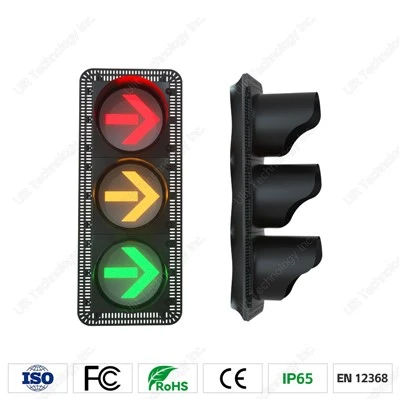
A traffic control system is a system that uniformly plans and manages the routes, times, types, and sequences of personnel, vehicles, ships, and aircraft, as well as the use of stations, docks, and airports. Its core objectives are to reduce accident rates, alleviate congestion, and improve traffic efficiency. Its technical means include single-intersection point control, arterial coordination control, and regional network control. Control methods encompass timing control, sensor control, adaptive control, and intelligent control. US traffic signal timing is characterized by its self-contained parameter system, primary reliance on sensor control coordination, and the use of a ring grid structure. Its sensor control is primarily fully sensor-based, and the adoption rate of adaptive traffic signal control is still low.
The development of this system began with London gas lights in 1868, and the first computer control system was established in Toronto, Canada in 1963. In China, research and development of sensor controllers began in the 1970s, and microcomputer-based systems were developed in the 1980s. It has gone through stages of single-point control, regional coordination control, and intelligent control, and in recent years has entered the stage of big data-driven collaborative control. Modern systems integrate artificial intelligence and multi-agent architecture to achieve real-time control functions such as dynamic speed limits, lane allocation, and truck management. The application case of the Nansha Bridge in China shows that the strategy of opening the hard shoulder can increase traffic capacity by up to 16.8%.