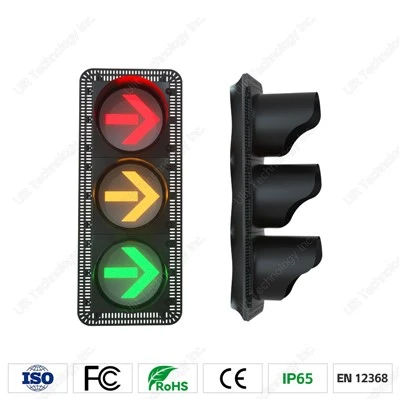
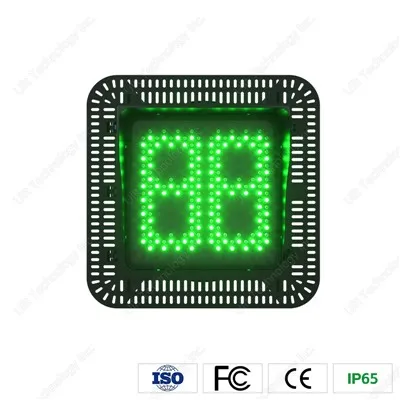
With the continuous development of the economy and society, urban construction is receiving increasing attention. Urban traffic has developed in a diversified way, with the number of public transit vehicles and the length of operating routes continuing to grow significantly, while taxis and private cars have also increased rapidly. However, the road conditions and driving environment on the roads are somewhat challenging: issues such as high road network density, excessive spacing between trunk lanes, the shortage of branch roads, and disorganized road functions persist. Due to the high-density and high-pressure load on roads, pedestrian crossings, ramp exits and other areas have become high-risk areas for traffic accidents in cities. Accidents also occur frequently at the suburban branch intersections and various important turning point intersections. Drivers' hesitation and sudden changes at critical locations are important reasons for the frequent occurrence of accidents, while ambiguous or unclear guidance traffic signs are also important reasons for drivers' such reactions.
Against this backdrop, active luminous traffic signs play an critical role in road traffic safety. There is still much to learn about active luminous traffic signs and their development. So, let's take a closer look at traffic signs and explore the evolution of active luminous traffic signs-from their origins to their development today.
Traffic Sign Illumination Methods and Evolution
In 1986, the China national standard Road Traffic Signs and Markings classified the illumination methods of traffic signs for the first time, stipulating the two main illumination methods for traffic signs: external illumination and internal illumination. In the early years, external illumination method was more commonly used for traffic signs in US, while in China, internal illumination was mostly used for luminous traffic signs, such as the light box signs used in highway tunnels in the past.
According to the current national standards of China, traffic signs are classified into three types based on their optical characteristics: retroreflective, illuminated and light-emitting. The retroreflective type generates light by the principle of light source reflection. Illumination type means installing white light sources on the outside or inside of traffic signs. The "active luminous sign" stipulated therein refers to a traffic sign in which the information content is displayed by the LED components installed on the traffic sign emitting light. It can meet the requirements of sign information recognition under all-weather environmental conditions, effectively solving the problems existing in ordinary traffic signs and greatly improving the level of road traffic safety management.
Common Classifications of Active Luminous Traffic Signs
1. Dot Matrix Display and Panel Display
The dot matrix type is divided into built-in type and external type. It uses Fresnel lens to encapsulate the LED on the surface of the traffic sign board, and densely and continuously arranges multiple dots in a line on the strokes of the text and the outline of the graphic to display the information content. This is called the external dot matrix display luminous traffic sign.
Without damaging the retroreflective material on the surface of the traffic sign board, the LED directional light source board is used. Through the preset holes of the text strokes and graphic outlines on the base plate of the traffic sign, multiple continuous and linear dot light sources form penetrable light from the back of the retroreflective material to display the information content, which is called internal dot matrix display luminous traffic sign.
The dot-matrix luminous traffic signs have strong light penetrability and can be set to flash, providing an excellent warning effect. Especially, the yellow LEDs remain highly visible in haze and bad weather.
2.Full Penetration Type and Semi Penetration Type
For semi penetration active luminous traffic signs, only the text, patterns and outlines have the penetrable light. The fully penetration type has penetrable light throughout the entire facepanel. These two types of panel display luminous traffic signs have full strokes and a soft visual effect, offering excellent visibility, especially in dark surroundings.

Quality Judgment Criteria for Active Luminous Traffic Signs
- Whether the expression is consistent: Traffic signs on each section of the road have a unified expression pattern, and the colors, shapes, characters, and patterns are consistent both during the day and at night (some road signs have different background colors at night and during the day). Only in this way can drivers meet the visibility requirements of the traffic signs at every stage.
- Whether it has strong visibility: Whether the size, the level of brightness, the ratio of text/graphics, the luminance contrast and other factors of the traffic lights are clear and easy to recognize, and whether there is any astigmatism or glare.
- Whether it can save energy, protect the environment and reduce costs: The later maintenance cost of ordinary traffic signs is relatively low, while the later maintenance cost of traffic signs with internal illumination method still needs to include the replacement of power modules, daily electricity usage, inspection, etc. Therefore, the energy consumption, construction and usage costs of active luminous traffic signs must be considered.
- Whether it is durable: When the lighting component malfunctions, in addition to the cost of repair and replacement, there is also the cost of traffic control during construction. As facilities used outdoors under all weather conditions, the durability of traffic signs is particularly important.
As traffic pressure continues to grow, even basic infrastructure such as luminous traffic signs must perform reliably. A seemingly insignificant mistake may lead to serious consequences. Therefore, choosing the right luminous traffic signs is more important to overall road safety than one might imagine.
In the research and development and application of active luminous traffic signs, Ulit Technology Inc. has always adhered to a scientific, rigorous, down-to-earth and meticulous working attitude in conducting experiments, research and practice, thereby improving product quality and technological content. With a scientific spirit, Ulit summarizes research results and practical experience to provide better guidance and services for users.

Advantages of Ulit Active Luminous Traffic Signs
- Pervious Faceplate: Support big size full/semi penetration type active light-emitting traffic signs, no joints on the pervious faceplate;
- Energy-efficient: Utilizing original factory LEDs of world-class brands, it features low energy consumption, high power, and consumes much less electricity per hour under the same brightness conditions than other brand LEDs; Long light attenuation period, with a light attenuation rate of no more than 5% within 5 years; Stable performance and a long service life.
- Shadow-free Optical Design: Multi-layer optical refraction design, the panel displays no shadow and has balanced brightness;
- IoT (Internet of Things): Support protocol docking and wired or wireless IoT application extension;
- Good Visibility: Light-emitting components with strong penetrability and long visual range, meeting the usage requirements with all kinds of bad weather conditions;
- Intelligent Control: Support adjusting the own brightness automatically according to the ambient brightness; Support controls such as flashing, always on, and off;
- Low operation and maintenance costs over the entire lifespan: Suitable for all-weather use in outdoor environments, featuring highly corrosion-resistant reflective film, a long service life, and long mean time between failures.

Since 2021, Ulit active luminous traffic signs have been applied in various places such as the Inner Ring Expressway, the IKEA Outlets business district, the Chengkai Expressway and other places in Chongqing and some areas in Guizhou Province. Since the installation of the active luminous traffic signs on the above-mentioned sections of the road in 2021, Ulit active luminous traffic signs have shown excellent recognition effects in various application scenarios such as night, rain, fog, and icy and snowy weather, avoiding potential safety hazards to the greatest extent. This not only enhances road safety but also improves travel efficiency.
From traditional reflective type to LED active luminous type, traffic signs have continued to evolve. In terms of visual recognition effects, drivers used to have to use high beams to clearly see traffic sign information. Now, traffic signs have evolved to automatically adjust their brightness according to ambient light, and active luminous traffic signs are constantly improving.

(Click the image to learn more about Ulit LED active luminous traffic signs.)