In recent years, driven by the rapid development of big data, intelligent traffic has been constantly evolving and improving. Intelligent traffic focuses on integrating advanced technologies such as artificial intelligence, computer technology, and information technology with the traffic sector, thereby fostering closer connections among people, vehicles, and roads, enhancing efficiency, ensuring safety, and upgrading the comprehensive transportation system. A well-developed traffic system not only enhances people's sense of satisfaction and happiness, but also promotes the efficient aggregation and allocation of resources such as passenger flow and logistics, providing a strong impetus for economic development.
The government work report delivered in March pointed out that intelligent traffic uses precise perception, high-speed transmission and supercomputing to achieve Vehicle-Infrastructure Coordination and autonomous driving, which will greatly improve the route optimization and efficiency of traffic. "Networked coordinated control" is the major trend in the development of future traffic intersections.
However, the current infrastructure at traffic intersections has many problems and cannot keep up with the development speed of the major trend. The main problems existing in traditional traffic intersections are:
First, there are many devices and cables, and the construction is complex. Second, poor network and electricity security; Third, manual inspection is inefficient. Fourth, the equipment at intersections is difficult to manage and problems are hard to locate, which makes it hard to support the high-quality, highly reliable and safe construction and development of traffic intersections.

To address the aforementioned industry pain points, Ulit all-optical intersection has provided solutions with significant advantages:
- The Ulit all-optical intersection changes traditional centralized construction to distributed architecture. It adopts an optical bus architecture and replaces the nearly a hundred signal control lines of the traditional intersection with one photoelectric composite cable, significantly reducing the number of cables at the intersection and simplifying the construction. It offers great convenience for the future renovation or expansion of the intersection;
- The transmission of intersection light control information through optical fibers reduces the use of a large number of electronic components, overcomes the difficulty of increasing the signal processing rate of electronic components during transmission, greatly improves the transmission efficiency, and realizes efficient and reliable intersection signal control.
- It supports the priority mode of signal control. Under the premise of not affecting signal control, other front-end equipment such as traffic cameras, VMS signs and flow detection can realize communication interconnection on the same optical cable, simplifying the layout of communication lines at the intersection and optimizing the network structure at the intersection.
Solution Advantages

(Click the image to learn more about the Ulit all-optical intersection solution.)
The architecture of the all-optical intersection solution is divided into two layers: the intelligent traffic control host controller and intelligent traffic control sub-controller. The host controller is floor mounted, with built-in network aggregation module and host control module. The sub-controller is installed on the traffic light pole, built-in distributed light drive module, network module, power module and lightning protection module to achieve signal access and return of traffic light.

Case Show
At the beginning of this year, Ulit all-optical intersections were put into application at over a dozen intersections in a test site in Suzhou, Jiangsu Province. The advantages were significant. It simplified the facility deployment at intersections, shortened the time for intersection renovation, provided intersection traffic light protection functions, and made the operation of the intersection signal control system more stable. The implementation effect of the construction has been unanimously recognized by the relevant departments.

Test Site in Suzhou, Jiangsu Province

An Intersection in Nan'an District, Chongqing
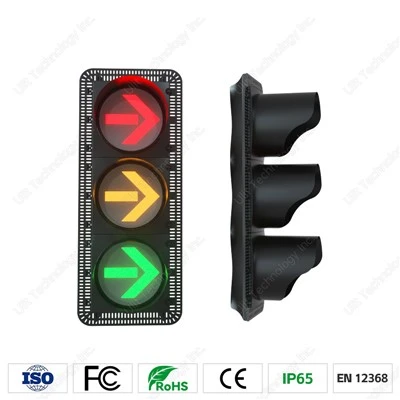
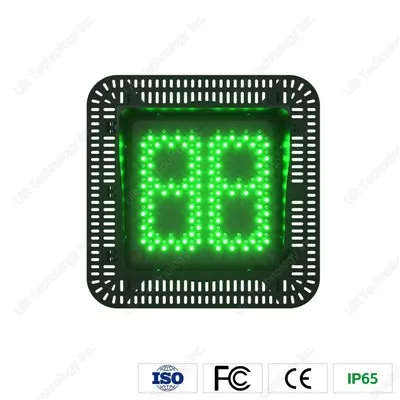
Recently, Ulit all-optical intelligent traffic lights (V3.0) have been officially launched. With just one photoelectric composite cable, they can replace the previous dozens of cables, and also transmit the status of the lamps and traffic camera videos back to the center. Simple, intelligent and maintainable.

Traffic is the bond connecting cities and the decisive factor in their rise and fall. The future of intelligent traffic has arrived. Ulit will continue to work hard in the research and development of traffic products and remain true to its original aspiration.